The letter is from a nineteen-year-old. He's in Texas doing thirty-five for murder. He'll be fifty-four when he gets out. He is requesting science fiction or fantasy and a Spanish dictionary, but any book will do. And that's how most of them end: an entreaty for any book at all, closing with profuse gratitude and blessing for the work we do.
I am at church, helping Books to Prisons, a volunteer organization that matches donated books to prisoner requests. It's my assignment for the day at Foundry United Methodist Church's "Great Day of Service," a church-wide half day of volunteering. As a writer and book lover, I requested this assignment; I believe in the power of books to educate, entertain, and transform.
I open a letter, read it, and try to find a few books on the shelves to meet the request. Then I package the books, weigh them, and add them to the appropriate group of packages based on weight. Then I choose another letter to read.
It's a huge task; there are stacks and boxes of letters on a metal shelf, and still more fill paper grocery bags on the floor. I can only do about four or five packages in one sitting, especially when I write a note to the prisoner (which always ends up being a full-fledged letter taking both sides of one sheet). There are only about four of us fulfilling requests. It's like bailing a flooded basement with a thimble. The standard message on the strip of paper that gets inserted into a book in every package asks the prisoner to wait at least five months before requesting more books.
Some of them want westerns, sci-fi, or fantasy; others want educational materials, like GED study books or accounting textbooks; still others want books on foreign language instruction or self-improvement. Most of the letters are well-written, with correct spelling, punctuation, and grammar. Most are in legible cursive handwriting. All express deep appreciation for the work of Books to Prisons.
A good number say they have no friends or family to visit them and no money or way to buy books. I choose the thickest books in the best condition I can find for them. Five months is a long time to wait for something else to occupy one's mind.
I have always felt slightly ambivalent about prison ministries. How much should we improve the living conditions of those who have stolen from, raped, or killed other people? How much sympathy should we feel towards criminals in solitary confinement when we don't know what landed them there?
Overall, though, I think that the loss of freedom, identity, friends, and a future, is probably plenty punishing even under the best of prison conditions. Giving them a Louis L'Amour novel is not going to coddle them. And if we are truly concerned about recidivism, then maybe sending a requested book to improve their minds or gain some personal insight is just a tiny investment in the future of all of our safety.
I recently went through all my books at home, gleaning the surplus from the still-treasured. Not only did I have books on shelves in my office and bedroom, but I had stacks of bins full of them in the basement - I have so many books I have to keep some in the basement! And I can walk to Barnes & Noble anytime I want and choose any book from thousands of volumes and buy it on the spot - or go onto Amazon.com in the comfort of my own home, order virtually any book I want from a vast pool of millions, and find it on my doorstep in a couple days. And yet in letter after letter prisoners ask for any book at all because they have no other way of getting one. And they are very, very grateful for that book.
Books to Prisons is housed in our church basement. It's a dimly-lit room with no windows, ringed by tall shelves of worn books. But I can come and go as I please, whereas others are not so fortunate. So the work done in that room is not depressing; it's energizing. Every package assembled in that room directly affects an individual person in a significant way.
So give me that thimble - I've got more bailing to do.
Thursday, July 16, 2009

Monday, April 27, 2009
Choose One (and one only)

Here's an interesting question:
Think about it carefully; your answer may surprise you. Can you live with only one? Imagine having the one you treasure most but without the other.
Tuesday, January 20, 2009
Wait, That's Our Band!
Producers and commentators, it seems, don't have kids in marching bands. Coverage of the inaugural parade by the major networks skipped nearly all commentary on the units in the parade, most of which were bands. They either continued analyzing the inauguration or the historic nature of the election, broadcasting the parade only as it appeared in the background over a reporter's shoulder, or reduced the parade to half a screen, again so they could show th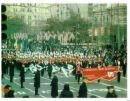 e reporter making observations of matters unrelated to the parade or the reaction of the new President and First Lady. If they did show the parade full screen, it was usually without any disclosure on the part of the journalists as to who was marching by at the moment. They didn't even bother displaying a graphic on the bottom of the screen so we could read it for ourselves while the unrelated commentary continued.
A bunch of us neighbors congregated over food and drink to enjoy the ceremony and parade, and we flipped through NBC, ABC, CBS, CNN, BBC, MSNBC, and FOX, trying to find someone who would tell us who the bands were and where they were from. We finally settled on NewsChannel 8, our local all-news station ("More Local. More Often."). The hosts seemed fresh out of broadcast school, but at least they were talking about the parade they were covering.
I was eager to see the ceremony. But I was excited to see the parade. Having marched through both high school and college, I still thrill at the sound of drum cadences coming from a nearby high school on a crisp fall night. If a football game is on (at someone else's house), the sound I key in on is not the ref's whistle or the quarterback making a call, but the pep band. And I still love watching bands in the Macy's Thanksgiving Parade and the Rose Bowl Parade.
I know what it's like selling M&M's, chocolate bars, raffle tickets, Entertainment coupon books, and fertilizer (yes, fertilizer) door-to-door to raise money for band trips. I know what it's like putting in hours and hours of practice, memorizing music and marching up and down streets for days on end in heat, cold, and rain, to prepare for the spotlight. And I know the excitement of travelling across the country or around the globe to compete or to march in a parade broadcast on national television.
I also know that my parents and the parents of all the other kids were just as excited about our trips as we in the band were. And if they were not chaperones on the buses, the only way they could share in our experience, after months of sharing in our practices and fundraising, was to stay glued to the TV if we were marching in a major parade, so as not to miss the twenty seconds we'd be in front of the camera.
So I am particularly frustrated with the bush league parade coverage because I identify with those parents, as well as the siblings and alumni of the band being ignored as background to the parade hosts' blather. When they say, "More on that when we return after this short break" just as a band is marching by, I want to scream in solidarity with all those moms and dads going, "Wait! That's our band!" as the screen fades to black for a message about leaky pipes or ED. We've been hearing perspectives, retro-analyses, and commentary of all things political for the past several months, and it will continue for at least the next four years. Can't we put it aside for two hours and just enjoy the parade?
I put up with all the usual cringe-worthy jokes of parade hosts because they also follow the script in describing the bands, where they came from, and some interesting anecdote about their parade preparation. I realize that there's no other focus for the Macy's parade (other than food preparation), but at the Rose Bowl parade they don't talk ad infinitum about the football game or the players or the history of the matchups, while the flower-covered floats pass by silently, out of focus behind some reporter wearing headphones. So why rob the inaugural parade units of the short-lived, hard-won honor and glory they deserve?
Sure, they'll still have fun and won't even know until later if they didn't make the broadcast or were shown but ignored. But I still want to know. I didn't buy all those M&M's for nothing.
Photo credit: www.ramband.com
 e reporter making observations of matters unrelated to the parade or the reaction of the new President and First Lady. If they did show the parade full screen, it was usually without any disclosure on the part of the journalists as to who was marching by at the moment. They didn't even bother displaying a graphic on the bottom of the screen so we could read it for ourselves while the unrelated commentary continued.
A bunch of us neighbors congregated over food and drink to enjoy the ceremony and parade, and we flipped through NBC, ABC, CBS, CNN, BBC, MSNBC, and FOX, trying to find someone who would tell us who the bands were and where they were from. We finally settled on NewsChannel 8, our local all-news station ("More Local. More Often."). The hosts seemed fresh out of broadcast school, but at least they were talking about the parade they were covering.
I was eager to see the ceremony. But I was excited to see the parade. Having marched through both high school and college, I still thrill at the sound of drum cadences coming from a nearby high school on a crisp fall night. If a football game is on (at someone else's house), the sound I key in on is not the ref's whistle or the quarterback making a call, but the pep band. And I still love watching bands in the Macy's Thanksgiving Parade and the Rose Bowl Parade.
I know what it's like selling M&M's, chocolate bars, raffle tickets, Entertainment coupon books, and fertilizer (yes, fertilizer) door-to-door to raise money for band trips. I know what it's like putting in hours and hours of practice, memorizing music and marching up and down streets for days on end in heat, cold, and rain, to prepare for the spotlight. And I know the excitement of travelling across the country or around the globe to compete or to march in a parade broadcast on national television.
I also know that my parents and the parents of all the other kids were just as excited about our trips as we in the band were. And if they were not chaperones on the buses, the only way they could share in our experience, after months of sharing in our practices and fundraising, was to stay glued to the TV if we were marching in a major parade, so as not to miss the twenty seconds we'd be in front of the camera.
So I am particularly frustrated with the bush league parade coverage because I identify with those parents, as well as the siblings and alumni of the band being ignored as background to the parade hosts' blather. When they say, "More on that when we return after this short break" just as a band is marching by, I want to scream in solidarity with all those moms and dads going, "Wait! That's our band!" as the screen fades to black for a message about leaky pipes or ED. We've been hearing perspectives, retro-analyses, and commentary of all things political for the past several months, and it will continue for at least the next four years. Can't we put it aside for two hours and just enjoy the parade?
I put up with all the usual cringe-worthy jokes of parade hosts because they also follow the script in describing the bands, where they came from, and some interesting anecdote about their parade preparation. I realize that there's no other focus for the Macy's parade (other than food preparation), but at the Rose Bowl parade they don't talk ad infinitum about the football game or the players or the history of the matchups, while the flower-covered floats pass by silently, out of focus behind some reporter wearing headphones. So why rob the inaugural parade units of the short-lived, hard-won honor and glory they deserve?
Sure, they'll still have fun and won't even know until later if they didn't make the broadcast or were shown but ignored. But I still want to know. I didn't buy all those M&M's for nothing.
Photo credit: www.ramband.com
Sunday, January 18, 2009
In Private Celebration
They've closed all bridges into the city from Virginia. They've prohibited bicycles (although that appears to be in question now). They're encouraging the use of Metro but asking people not to transfer. But there are no restrictions on walking into the city!
In anticipation of gargantuan crowds flocking to Washington, D.C., for the inauguration of President Barack Obama, the authorities have had to take extraordinary measures to deal with the onslaught. You can't fault them for thinking through every angle and putting certain prohibitions in place in an effort to make it an event which comes off with minimal problems. But - walking into the city? No strollers? No backpacks? No umbrellas?
Increased security is now a fact of life, especially in D.C. Hundreds of thousands will be packing every available spot of the Mall, watching the inauguration taking place several blocks away on Jum botrons. They will be able to see the Capitol from where they stand, but they won't be able to make out human beings in ticketed seats or the form of the new President as he stands with one hand on the Bible. And yet each person watching the big screens placed along the length of the Mall will have to stand in a blocks-long line and pass through security screening, anyway.
Ditto for the parade; you can't just walk up to Pennsylvania, craning your neck for a glimpse of the President without first passing through a security entry point. Even then, they are going to refuse all entry to the parade once a specified saturation point has been reached along the street - meaning the entire parade route will be fenced off?
Ah, the price of watching history being made in a post-9/11 world. Sixteen years ago, I stood near the Lincoln Memorial on a cold January night for President Clinton's pre-inaugural concert. A-list Hollywood appeared then, also, and I didn't care that I couldn't see anyone famous without checking the big screen. It was just exciting being in the midst of an excited, hopeful crowd after twelve years of Reagan/Bush. Today's national mood of hope and relief was similar to that of early 1993. The youthful Bill Clinton and Al Gore were going to change Washington and the world. There were no security checkpoints back then, no cloud of a terrorist threat.
On January 20th, I stood on the Mall and watched the inauguration ceremony while stomping my feet and rubbing my hands. I took pictures of President Clinton raising his right hand on the big screen. And I also volunteered at the Presidential Inaugural Committee in the weeks leading up to the big day, tolerating the snotty, sloppy attitudes of the twenty-somethings on staff and performing menial tasks at night in hopes of snagging the prize assignment of working at one of the poshest Inaugural balls on the schedule - which, in the end, I got.
At the ball, I walked around amidst the rich and famous: Ralph Lauren, Harry Belafonte, Loretta Swit. At one point in the evening I stood at a door to stamp hands of departing guests and got to ask Dustin Hoffman if he intended on returning to the ball.
So I have had the good fortune of living in Washington and doing a quintessentially Washingtonian thing, and it was a great experience I'll remember for a long time. It may not have been as historic as this year, and it's hard to stay home, living a just a few blocks from the Metro and a five-minute drive from the Lincoln Memorial and not needing maps or subway lessons. But I'd rather not walk into D.C. (about an hour and a half to the Mall), stand in interminable security lines and wait for hours in the January cold, only to watch the inauguration on a big screen TV.
Instead, I'll be watching it on a smaller big screen TV with neighbors in a warm home, enjoying the ceremony, each other, Washingtonopoly, and good food and drink. We'll be toasting the start of a new era (and "the end of an error," as one commentator said today) and giving up our spots of the Mall for some of the hundreds of thousands of Americans travelling to our city for this event. We're glad to do it. Happy Inauguration, America!
Photo credit: About.com
In anticipation of gargantuan crowds flocking to Washington, D.C., for the inauguration of President Barack Obama, the authorities have had to take extraordinary measures to deal with the onslaught. You can't fault them for thinking through every angle and putting certain prohibitions in place in an effort to make it an event which comes off with minimal problems. But - walking into the city? No strollers? No backpacks? No umbrellas?
Increased security is now a fact of life, especially in D.C. Hundreds of thousands will be packing every available spot of the Mall, watching the inauguration taking place several blocks away on Jum
 botrons. They will be able to see the Capitol from where they stand, but they won't be able to make out human beings in ticketed seats or the form of the new President as he stands with one hand on the Bible. And yet each person watching the big screens placed along the length of the Mall will have to stand in a blocks-long line and pass through security screening, anyway.
Ditto for the parade; you can't just walk up to Pennsylvania, craning your neck for a glimpse of the President without first passing through a security entry point. Even then, they are going to refuse all entry to the parade once a specified saturation point has been reached along the street - meaning the entire parade route will be fenced off?
Ah, the price of watching history being made in a post-9/11 world. Sixteen years ago, I stood near the Lincoln Memorial on a cold January night for President Clinton's pre-inaugural concert. A-list Hollywood appeared then, also, and I didn't care that I couldn't see anyone famous without checking the big screen. It was just exciting being in the midst of an excited, hopeful crowd after twelve years of Reagan/Bush. Today's national mood of hope and relief was similar to that of early 1993. The youthful Bill Clinton and Al Gore were going to change Washington and the world. There were no security checkpoints back then, no cloud of a terrorist threat.
On January 20th, I stood on the Mall and watched the inauguration ceremony while stomping my feet and rubbing my hands. I took pictures of President Clinton raising his right hand on the big screen. And I also volunteered at the Presidential Inaugural Committee in the weeks leading up to the big day, tolerating the snotty, sloppy attitudes of the twenty-somethings on staff and performing menial tasks at night in hopes of snagging the prize assignment of working at one of the poshest Inaugural balls on the schedule - which, in the end, I got.
At the ball, I walked around amidst the rich and famous: Ralph Lauren, Harry Belafonte, Loretta Swit. At one point in the evening I stood at a door to stamp hands of departing guests and got to ask Dustin Hoffman if he intended on returning to the ball.
So I have had the good fortune of living in Washington and doing a quintessentially Washingtonian thing, and it was a great experience I'll remember for a long time. It may not have been as historic as this year, and it's hard to stay home, living a just a few blocks from the Metro and a five-minute drive from the Lincoln Memorial and not needing maps or subway lessons. But I'd rather not walk into D.C. (about an hour and a half to the Mall), stand in interminable security lines and wait for hours in the January cold, only to watch the inauguration on a big screen TV.
Instead, I'll be watching it on a smaller big screen TV with neighbors in a warm home, enjoying the ceremony, each other, Washingtonopoly, and good food and drink. We'll be toasting the start of a new era (and "the end of an error," as one commentator said today) and giving up our spots of the Mall for some of the hundreds of thousands of Americans travelling to our city for this event. We're glad to do it. Happy Inauguration, America!
Photo credit: About.com
Thursday, September 18, 2008
Effortlessly Inspiring Hate
Saturday night on my way to Remington's, my favorite watering hole in D.C., a large man with an intimidating amble walked down the middle of the sidewalk towards me. Something put me on guard, and as we passed each other, he muttered, "faggot," under his breath. Fortunately, he continued on his way, and I reached the door a few yards later.
How can someone size me up in the time it takes to walk half a block without even exchanging a single word? Recently, someone told me I do not come off as "overwhelmingly heterosexual" - meaning, I suppose, that I do not drip masculinity - but neither have I ever thought I was overtly homosexual in appearance, voice, or behavior.
Nevertheless, I have always set off the gaydar of people who likely have never even heard of gaydar. In high school I was pegged as gay and hated for it by many of the boys on the track team I helped manage, at a time when I self-identified as straight. Someone in the lunchroom called me a faggot one day. (Granted, I was wearing the same shirt as the friend I was eating with, and while he was embarrassed about it, I was rather pleased.) And once in the dorm at college, a guy down the hall called me "a fuckin' gay boy."
Fast forward to my life as a gay man in D.C. One very late night, halfway to sunrise, I was walking hand-in-hand with my boyfriend in Dupont Circle, and we heard someone in a small group of questionable types sitting against a building mutter, "faggots," after we walked past, followed by the sound of a bottle smashing against the sidewalk. We kept going, and nothing happened, but once again I was struck first by how quickly we were judged, and second, how instantly being perceived as gay can elicit hate-filled behavior.
It's important to remember these experiences in a city with a large gay population, one that is thought to be at least somewhat gay-friendly. Living in our cozy gay worlds, where most of our friends are gay and where it seems there is gayness everywhere, we can easily become complacent about safety. The D.C. police department’s Gay and Lesbian Liaison Unit (GLLU) used to have two officers (one gay and one lesbian), and now it has several members, some of whom are straight. Arlington County now has a GLLU. This increases our sense of safety and protection. But the fact is, D.C. is experiencing an increase in violent crime and in "bias crimes" - more commonly known as hate crimes - against gays, so it's prudent to remember that even though awareness, sensitivity, and tolerance have increased, the picture's not all rosy.
What I have gained from my experience as a gay man, however, is an increased sensitivity to bigotry towards others, particularly blacks, living in an area with a large African American population. It has increased my self-awareness of the prejudice I carry with me every day, the spot judgments I myself make of others in that same half-block distance, the smug assurance I feel characterizing someone else within a few seconds, at least until I hear them speak.
At a recent fiction workshop, I felt confident in guessing who wrote which story from the pile of manuscripts we each received prior to arriving at the workshop. What surprise - and what shame - I felt upon learning that the person I decided probably wrote one of the worst stories was actually the writer of one of the best. I was amazed to think how quickly I came to my conclusions with no evidence to reach them. (Thankfully, I was able to quickly jettison any preconceived notions of this person and enjoyed our week together of writing and discussion.)
How can someone size me up in the time it takes to walk half a block without even exchanging a single word? Recently, someone told me I do not come off as "overwhelmingly heterosexual" - meaning, I suppose, that I do not drip masculinity - but neither have I ever thought I was overtly homosexual in appearance, voice, or behavior.
Nevertheless, I have always set off the gaydar of people who likely have never even heard of gaydar. In high school I was pegged as gay and hated for it by many of the boys on the track team I helped manage, at a time when I self-identified as straight. Someone in the lunchroom called me a faggot one day. (Granted, I was wearing the same shirt as the friend I was eating with, and while he was embarrassed about it, I was rather pleased.) And once in the dorm at college, a guy down the hall called me "a fuckin' gay boy."
Fast forward to my life as a gay man in D.C. One very late night, halfway to sunrise, I was walking hand-in-hand with my boyfriend in Dupont Circle, and we heard someone in a small group of questionable types sitting against a building mutter, "faggots," after we walked past, followed by the sound of a bottle smashing against the sidewalk. We kept going, and nothing happened, but once again I was struck first by how quickly we were judged, and second, how instantly being perceived as gay can elicit hate-filled behavior.
It's important to remember these experiences in a city with a large gay population, one that is thought to be at least somewhat gay-friendly. Living in our cozy gay worlds, where most of our friends are gay and where it seems there is gayness everywhere, we can easily become complacent about safety. The D.C. police department’s Gay and Lesbian Liaison Unit (GLLU) used to have two officers (one gay and one lesbian), and now it has several members, some of whom are straight. Arlington County now has a GLLU. This increases our sense of safety and protection. But the fact is, D.C. is experiencing an increase in violent crime and in "bias crimes" - more commonly known as hate crimes - against gays, so it's prudent to remember that even though awareness, sensitivity, and tolerance have increased, the picture's not all rosy.
What I have gained from my experience as a gay man, however, is an increased sensitivity to bigotry towards others, particularly blacks, living in an area with a large African American population. It has increased my self-awareness of the prejudice I carry with me every day, the spot judgments I myself make of others in that same half-block distance, the smug assurance I feel characterizing someone else within a few seconds, at least until I hear them speak.
At a recent fiction workshop, I felt confident in guessing who wrote which story from the pile of manuscripts we each received prior to arriving at the workshop. What surprise - and what shame - I felt upon learning that the person I decided probably wrote one of the worst stories was actually the writer of one of the best. I was amazed to think how quickly I came to my conclusions with no evidence to reach them. (Thankfully, I was able to quickly jettison any preconceived notions of this person and enjoyed our week together of writing and discussion.)
How incredible that such a gleaming silver lining could be reaped from my experiences of being treated hatefully, that my eyes were opened to my own bigotry in time for me to do something about it. Quite often, I am sad to admit, I catch myself having ideas about someone I’ve just met – or have not yet met – but now I take those ideas and leave them at the door before allowing them to poison my interaction with that person. Like Joseph (see Genesis 50:20), what man intended for harm, God meant for good. And for that I am thankful.
Monday, August 25, 2008
Michelle '24
 I love Michelle Obama. She's sharp, articulate, impassioned, genuine, and warm, among many other things. Since there is no getting around comparisons, she's the polar opposite of ice queen Cindy McCain and would do much greater good for many more people in the role of First Lady. And if Barack wins the White House, I believe she could follow the same path as Hillary. Fist bump!
Photo credit: Reuters
Wednesday, May 28, 2008
You Can Go Home Again
Watching people retire over the years, I always wondered why so many were drawn to return to their hometown, since I had never seen myself doing so. When I moved to Washington, D.C. in my early twenties I was so enamored of the city and so glad to get away from home (specifically my father), that I couldn't imagine ever wanting to return for more than a week at a time.
After many years, though, as I felt myself becoming less and less a Minnesotan and more and more a Washingtonian, I began to feel interested in seeing the sights on trips home, both the new ones and the old ones I'd never gotten around to seeing while growing up. I was becoming a tourist in my own hometown!
And when my father died, something big changed. Suddenly Minnesota meant home in a new, or maybe renewed, way, and I suddenly couldn't get enough of loons, Garrison Keillor, or WCCO radio. Because I had lost such an important part of my rootedness, I felt a strong need to grab hold of whatever would affirm my Minnesotan background. It was startling and mysterious, this desperate call to the place where I grew up.
Over the past few years I have found myself looking at the Star Tribune real estate ads, imagining myself buying the perfect bungalow in Minneapolis, somewhere near the lakes. And every time I visit, I enjoy it more and more. There is always the chance that it has to do with the relaxation and momentary happiness of being on vacation, away from the responsibilities of home and work, but I can't help wondering if it's more than that, if it has more to do with that elusive quality of life thing, especially "Minnesota nice" - which is, I can say with the authority of someone who has lived elsewhere for 24 years, more than simply a self-adulatory construct of the state's own residents. If people everywhere have to deal with the same things - commuting to work, going to baseball games, buying toothpaste at the drugstore - then it is the little things, the chance encounters with service personnel or fellow residents, which make the difference. When people greet you or say "thank you" and "have a nice day" after ringing you up, it's clear they actually mean it. When people who are supposed to help you on the phone actually do, and you realize they even want to, it feels like a time warp. When someone drives you home because you missed your bus, it's unbelievable but real.
At the end of one's career, then, when thinking about where to spend the remaining years of one's life, it makes a great deal of sense to return to the place you first felt warm and safe, especially if as an adult, you have come to an appreciation of that place that you lacked as a child, an appreciation that has grown and strengthened over time.
Last weekend I attended a family reunion, the first for my family not precipitated by a death or marriage proposal. Going to events together and simply sharing meals and enjoying each other's company were powerful experiences in that we were there to do that and only that. For me it was reconnecting with family in a new way, with the sole purpose of reaffirming our ties and evidencing the worth which we all placed on doing so. As a middle-aged man, I no longer take my family for granted as I did in my youth, and I am grateful to all those who showed me along the way how precious family is and who brought me to a place where I can appreciate it for the rest of my life.
It's good to spread your wings and explore life wherever it may take you. I still can't see living where I have to shovel snow, worry about the pipes freezing and the car starting in the morning, or run indoors at twilight to avoid mosquitoes so large that t-shirts commemorate them as the state bird. But if in no other way than in my heart, I can always go home again.
After many years, though, as I felt myself becoming less and less a Minnesotan and more and more a Washingtonian, I began to feel interested in seeing the sights on trips home, both the new ones and the old ones I'd never gotten around to seeing while growing up. I was becoming a tourist in my own hometown!
And when my father died, something big changed. Suddenly Minnesota meant home in a new, or maybe renewed, way, and I suddenly couldn't get enough of loons, Garrison Keillor, or WCCO radio. Because I had lost such an important part of my rootedness, I felt a strong need to grab hold of whatever would affirm my Minnesotan background. It was startling and mysterious, this desperate call to the place where I grew up.
Over the past few years I have found myself looking at the Star Tribune real estate ads, imagining myself buying the perfect bungalow in Minneapolis, somewhere near the lakes. And every time I visit, I enjoy it more and more. There is always the chance that it has to do with the relaxation and momentary happiness of being on vacation, away from the responsibilities of home and work, but I can't help wondering if it's more than that, if it has more to do with that elusive quality of life thing, especially "Minnesota nice" - which is, I can say with the authority of someone who has lived elsewhere for 24 years, more than simply a self-adulatory construct of the state's own residents. If people everywhere have to deal with the same things - commuting to work, going to baseball games, buying toothpaste at the drugstore - then it is the little things, the chance encounters with service personnel or fellow residents, which make the difference. When people greet you or say "thank you" and "have a nice day" after ringing you up, it's clear they actually mean it. When people who are supposed to help you on the phone actually do, and you realize they even want to, it feels like a time warp. When someone drives you home because you missed your bus, it's unbelievable but real.
At the end of one's career, then, when thinking about where to spend the remaining years of one's life, it makes a great deal of sense to return to the place you first felt warm and safe, especially if as an adult, you have come to an appreciation of that place that you lacked as a child, an appreciation that has grown and strengthened over time.
Last weekend I attended a family reunion, the first for my family not precipitated by a death
 or marriage proposal. Going to events together and simply sharing meals and enjoying each other's company were powerful experiences in that we were there to do that and only that. For me it was reconnecting with family in a new way, with the sole purpose of reaffirming our ties and evidencing the worth which we all placed on doing so. As a middle-aged man, I no longer take my family for granted as I did in my youth, and I am grateful to all those who showed me along the way how precious family is and who brought me to a place where I can appreciate it for the rest of my life.
It's good to spread your wings and explore life wherever it may take you. I still can't see living where I have to shovel snow, worry about the pipes freezing and the car starting in the morning, or run indoors at twilight to avoid mosquitoes so large that t-shirts commemorate them as the state bird. But if in no other way than in my heart, I can always go home again.
Subscribe to:
Posts (Atom)


